
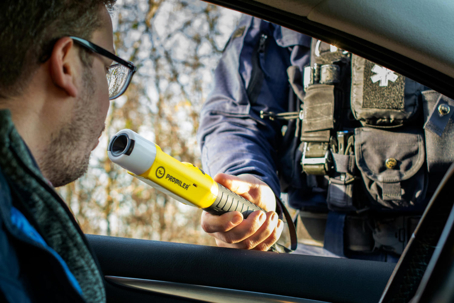
You probably still remember the glare of the blue lights, standing on the side of a DeSoto County road while an officer told you to walk heel-to-toe or balance on one-leg. Maybe you felt unsteady, confused by the instructions, or worried that every small mistake made you look drunk. That short roadside encounter can feel like it decides your entire future.
Those field sobriety tests are often the most stressful part of a DWI stop, and they leave many people wondering what just happened. Did you have to do those tests? Does the officer’s claim that you “failed” mean you are automatically guilty? Our goal here is to break down what those tests really are, how they work in DeSoto County, and what they mean for your DWI case in Mississippi.
At Hayes Law Firm, we have reviewed many DeSoto County DWI stops, including body cam and dash cam footage that shows exactly how field sobriety tests were given. That experience has shown us how often the conditions, the driver’s health, and the officer’s own choices affect the outcome. We want to share that insight so you understand what you went through and why those tests may not be as clear-cut as they seemed on the roadside.
Why Officers Use Sobriety Tests in DeSoto County DWI Stops
Most DWI investigations in DeSoto County begin with a routine traffic stop. The reason may be minor, such as speeding, drifting within a lane, or a broken taillight. Once the officer approaches the vehicle, the investigation often expands. While asking for your license and insurance, the officer is also observing your eyes, listening to your speech, and watching your movements. If the officer suspects impairment, the next step is often to ask you to step out of the vehicle and perform field sobriety tests.
From a law enforcement perspective, these tests are meant to help establish probable cause for a DWI arrest. Field sobriety tests are designed to assess balance, coordination, and the ability to follow instructions, all of which officers are trained to associate with alcohol or drug impairment. In many DeSoto County cases, an arrest decision is based heavily on how the officer claims the driver performed during these roadside exercises.
It is important to understand the distinction between field sobriety tests and chemical tests. Field sobriety tests are observational and subjective. Chemical tests, such as breath or blood tests, are intended to measure alcohol or drug levels in the body. Mississippi’s implied consent laws apply to chemical testing, not to roadside balance or eye tests. Still, officers often use field sobriety tests as justification for requesting chemical testing or making an arrest.
Because we handle DWI cases throughout DeSoto County and Northern Mississippi, we see this pattern repeatedly. Officers rely on field sobriety tests in their reports, and prosecutors later rely on those same tests to argue that an arrest was lawful. Recognizing how central these tests are allows a DeSoto County DWI defense lawyer to focus on whether they were administered fairly, accurately, and under appropriate conditions.
Common Standard Field Sobriety Tests Officers Rely On
Most DeSoto County officers rely on a small group of standardized field sobriety tests that come from national law enforcement training. These tests are supposed to be administered the same way every time so officers can look for specific indicators, commonly referred to as “clues,” that are believed to suggest impairment. The three primary standardized tests are the horizontal gaze nystagmus test, the walk and turn test, and the one-leg stand test.
The standardized field sobriety tests most commonly used include:
- Horizontal Gaze Nystagmus (HGN)
- Walk and Turn
- One-Leg Stand
Horizontal Gaze Nystagmus (HGN)
The horizontal gaze nystagmus test focuses on eye movement. The officer asks the driver to follow a pen, light, or fingertip with their eyes while keeping their head still. The officer looks for involuntary jerking of the eyes at certain angles, which law enforcement training suggests may correlate with alcohol consumption. Despite how technical it sounds, this test remains an observation rather than a scientific measurement.
Walk and Turn
The walk and turn test requires the driver to stand heel to toe while listening to instructions, then take a specific number of heel-to-toe steps, perform a particular turn, and walk back. This test is meant to evaluate both physical balance and mental processing. Officers record clues such as stepping off the line, missing heel to toe, using arms for balance, starting too soon, stopping during the test, or turning incorrectly.
One-Leg Stand
The one-leg stand test asks the driver to raise one foot a few inches off the ground and count aloud for about thirty seconds. During this time, the officer watches for swaying, hopping, using arms for balance, or putting the foot down early. While it may sound simple, many sober people struggle with this test under roadside conditions.
Because we closely review police training materials and DWI reports, we know exactly how officers are trained to administer and score these tests. That knowledge helps us identify when steps were skipped, instructions were unclear, or clues were recorded in a way that does not match what actually happened on video.
How Test Conditions & Personal Factors Can Skew Results
Field sobriety tests assume ideal conditions, but roadside stops in DeSoto County rarely offer anything close to a controlled environment. Many tests are conducted on uneven shoulders, gravel surfaces, sloped roads, or poorly lit areas. If the ground is uneven or the driver is asked to follow an imaginary line, even a sober person may struggle.
Environmental and personal factors that commonly affect performance include:
- Uneven or sloped surfaces
- Poor lighting or glare from headlights
- Weather conditions such as rain, wind, or cold
- Traffic noise and passing vehicles
- Inappropriate footwear like boots, dress shoes, or heels
A driver’s physical condition also plays a major role. Knee, hip, or back problems, inner ear issues, balance disorders, neuropathy, or past injuries can make balance tests difficult regardless of sobriety. Age and body composition can also affect performance. Stress and anxiety matter too. Being stopped, questioned, and observed closely by an armed officer can cause shaking, confusion, or rushed movements that have nothing to do with alcohol or drugs.
Communication issues can further complicate matters. Drivers with hearing problems, language barriers, or simple confusion may not fully understand instructions, especially if those instructions are rushed or incomplete. We have seen situations where officers demonstrate only part of a test or give instructions once, then mark a “clue” when the driver makes a mistake that could easily stem from misunderstanding rather than impairment.
At Hayes Law Firm, we look beyond the checklist in the police report. We review video footage, examine medical histories when relevant, and evaluate the actual roadside conditions. These details often explain why a driver appeared unsteady and provide strong grounds for challenging the officer’s conclusions.
The Reliability of Field Sobriety Tests in Mississippi DWI Cases
Although officers and prosecutors often treat field sobriety tests as strong evidence, their reliability is limited. Even law enforcement training materials acknowledge that these tests only suggest a probability of impairment under specific conditions. They are not scientific measurements, and their accuracy depends heavily on strict adherence to training protocols.
For tests to be considered standardized, officers must follow detailed procedures for instructions, demonstrations, and scoring. In real-world DeSoto County stops, those procedures are often rushed or modified to fit roadside conditions. Any deviation from training reduces the reliability of the results.
In Mississippi courts, field sobriety tests are generally viewed as just one piece of the evidence. Judges often consider them alongside driving behavior, speech, odor of alcohol, and chemical test results. When a DeSoto County DWI defense lawyer can show that tests were improperly administered or affected by outside factors, the weight given to those tests can be significantly reduced.
Officer interpretation also plays a major role. Two officers may score the same performance differently. Written reports often emphasize stumbles or balance issues that appear minor or unclear on video. We routinely compare reports to footage and find that the driver’s performance was less problematic than the report suggests.
Local courtroom experience matters. Knowing how DeSoto County judges view sobriety tests helps determine whether the best strategy is to challenge admissibility, reduce their impact, or place them in context with the rest of the evidence.
Your Right to Refuse Field Sobriety Tests in DeSoto County
Many drivers in DeSoto County are surprised to learn that field sobriety tests are not always mandatory under Mississippi law. In the stress of a traffic stop, an officer’s request to perform balance or eye tests can feel like a command, even though these roadside exercises are usually voluntary.
Understanding your rights—and the potential consequences of either choice—can help you make sense of what happened during your stop and how it may affect a DWI case.
- In Mississippi, drivers are generally not legally required to perform field sobriety tests, even though officers may not clearly explain that the tests are optional.
- Field sobriety tests are different from chemical tests such as breath, blood, or urine testing. Mississippi’s implied consent laws apply to chemical tests after arrest, not to roadside balance or eye tests.
- Refusing field sobriety tests does not automatically prevent an arrest, as officers may rely on other observations, and the refusal may be mentioned in the police report.
- Agreeing to perform the tests can also carry risks, since the officer may use your performance as evidence later, especially if conditions or health issues affect your balance or coordination.
- There is no one-size-fits-all answer for every driver. A DeSoto County DWI defense lawyer reviews the specific facts, your health, and the available evidence to assess how your decision impacts your case.
What Failing or Refusing Sobriety Tests Means for Your DWI Case
An officer’s statement that you “failed” field sobriety tests does not automatically mean you are guilty. That conclusion is an opinion that can be challenged, especially when video footage, conditions, or personal factors tell a different story.
When a test is marked as failed, the officer records certain clues. At trial, prosecutors highlight those clues to argue impairment. A defense attorney can counter by showing unclear instructions, uneven surfaces, or otherwise steady behavior throughout the stop.
If you refused testing, prosecutors may argue that the refusal suggests guilt. Defense counsel can present alternative explanations such as medical concerns, nervousness, or confusion. Courts often recognize that refusal alone does not prove impairment.
At Hayes Law Firm, we analyze how sobriety tests fit into the entire case, not just in isolation. We carefully compare video evidence with written reports and highlight inconsistencies that weaken the state’s narrative.
How We Evaluate Sobriety Tests in DeSoto County DWI Cases
Our review process begins with collecting all available evidence, including police reports and video footage. We examine the reason for the stop, the officer’s observations, and the sequence leading to the request for field sobriety tests.
We then analyze the tests themselves, focusing on setup, instructions, demonstrations, and scoring. We also examine personal factors such as injuries, medical conditions, or medications that could affect performance.
Because we regularly practice in DeSoto County and Northern Mississippi, we understand how local courts approach these issues. That insight shapes how we challenge sobriety test evidence and build a defense strategy tailored to your case.
Talk With A DeSoto County DWI Lawyer About Your Sobriety Tests
Field sobriety tests often feel like the turning point in a DWI stop, but they are only one piece of the case. When examined closely, these tests often reveal flaws, inconsistencies, and alternative explanations that matter in court.
If you faced field sobriety tests in DeSoto County, you do not have to face the aftermath alone. At Hayes Law Firm, we regularly challenge how DWI Sobriety Tests in Mississippi are used and help clients understand their options. A knowledgeable DeSoto County DWI defense lawyer can review what happened, explain what it means, and fight for the strongest possible outcome.
Call (662) 503-8409 or reach out online to speak with our DWI attorney in DeSoto County.